 Grow Guide
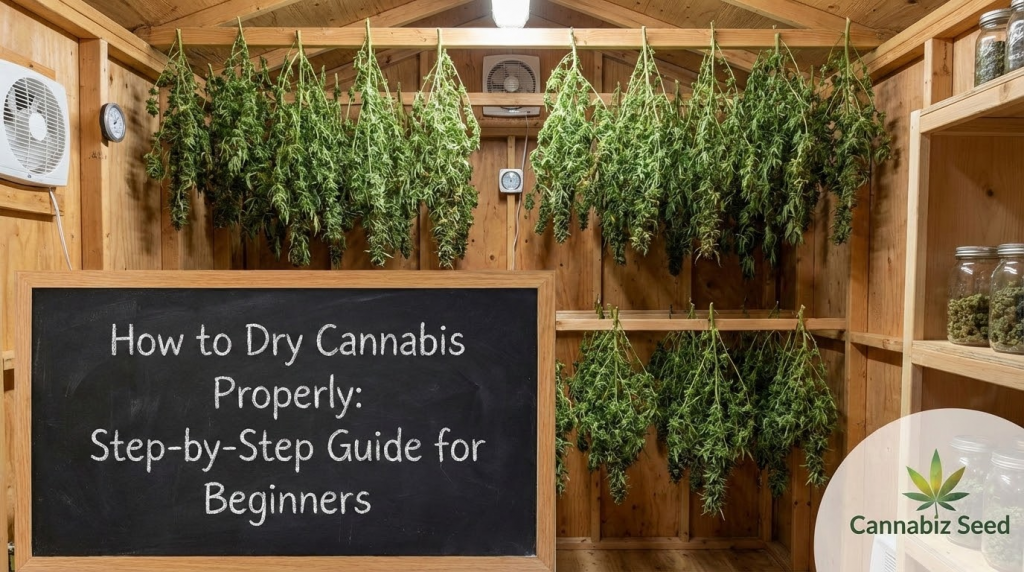
How to Dry Cannabis Properly: Step-by-Step Guide for Beginners
Feb
For many growers, a considerable part of the growing journey is complete after you chop your buds down. However, those beautiful sticky buds are not yet the final product you’ve been dreaming of.
How you dry your cannabis buds will determine whether you get a top-shelf experience or a harsh smoke.
Why is properly drying cannabis important
Develops a Smoother and Tastier Smoke
Freshly harvested cannabis flowers contain high levels of chlorophyll. This green colour pigment, when smoked, produces a grassy taste that is often described as hay-like. It also makes the smoke harsh on the throat.
With a controlled drying process, the plant’s enzymes effectively break down any residual chlorophyll in the buds. This process eliminates all the bad taste, allowing the authentic strain’s flavor to shine through for an enjoyable and smooth experience.
Preserves Potency and Aroma
The delicate THC, CBD, and terpenes, require careful protection during storage to maintain their potency and enjoyable qualities. Rapid drying can lead to the loss of these vital components. A slow and controlled drying process locks them in, resulting in a superior product months after harvest.
Maximises “Bag Appeal”
Properly drying your cannabis buds helps densify their structure and retains their beautiful colour. Rushed buds often look shriveled and less appealing.
Prevents Mould After Harvest
Too much moisture is the number one cause of mould, which will completely ruin your entire harvest. The goal of drying is to lower the plant’s water activity to a level where mould and mildew simply cannot grow, keeping your hard-earned buds safe.
What are ideal cannabis drying conditions?
No matter the method you will use in drying your weed harvest, you need to maintain optimal drying conditions.
- The temperature should hold steady between 60°F and 70°F (15°C to 21°C), because excessive heat will burn off those fragrant terpenes that define the strain’s smell and taste.
- You must maintain a relative humidity level right in the sweet spot of 45% to 55%, as this precise amount of moisture in the air prevents both a too-quick dry and the onset of bud rot or mold.
- The space needs to be entirely dark, ensuring complete darkness 24 hours a day, so direct light doesn’t degrade the valuable THC into less potent compounds.
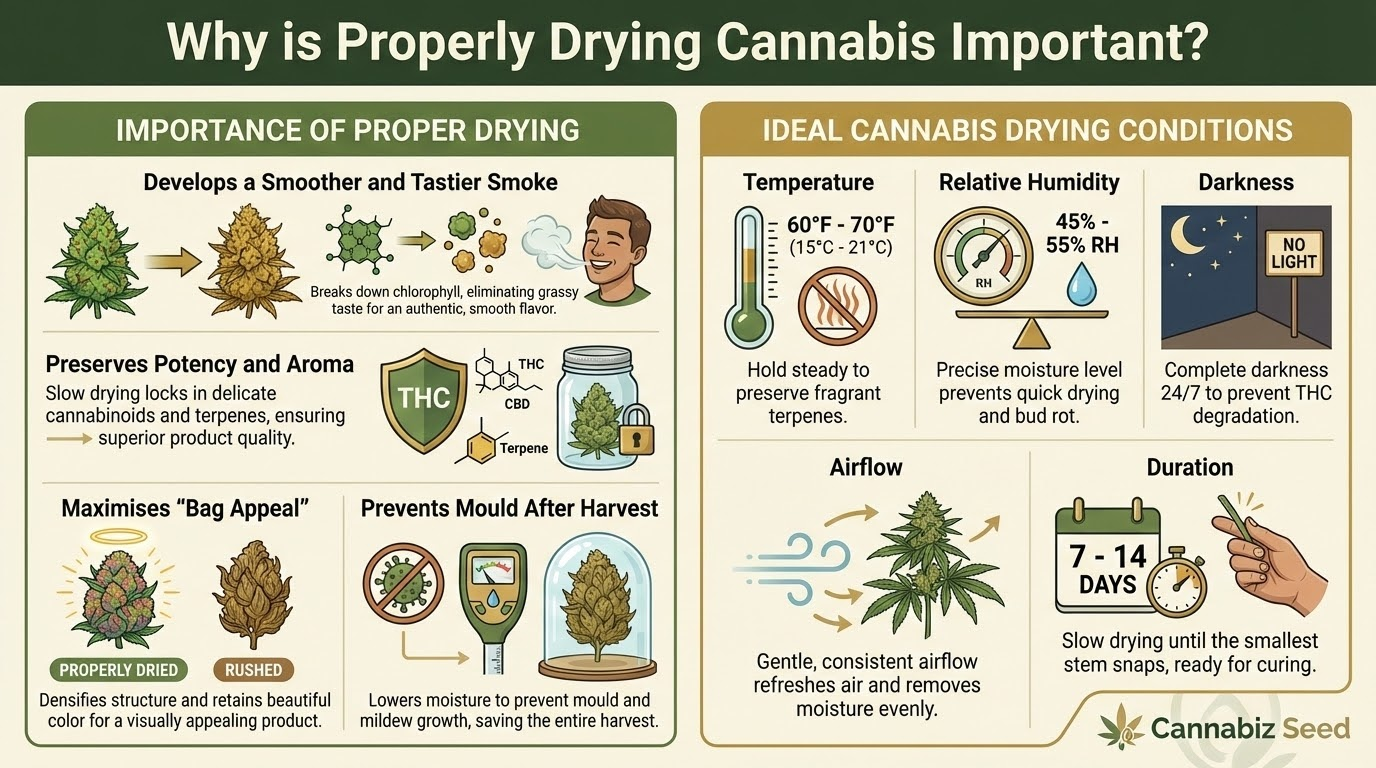
- Gentle, consistent airflow must be present to refresh the air, which removes moisture without blasting the delicate flower buds directly with a fan, causing uneven drying.
- The whole process should take about seven to fourteen days, allowing the buds to dry slowly until the smallest stem snaps cleanly, signaling your high-quality cannabis is ready for the cure.
How to Dry Cannabis
The Hanging Branches Method
This traditional technique involves cutting your plant into large branches and hanging them upside down in a controlled environment. The cuts dry slowly over one to two weeks before the buds are moved into curing jars.
How to Do It
- Chop: Cut your plant down into manageable, individual branches.
- Pluck: Remove only the largest fan leaves, which have no frost on them. Leave the smaller “sugar leaves” for now if you plan to dry trim later.
- Hang: Use string, wire, or clothes hangers to hang each branch upside down. How do you properly hang cannabis to dry? The key is giving each branch plenty of its own space so air can flow all around them.
- Wait: Place them in your dark, controlled drying room. Wait until the smaller stems make a clean snap when you bend them—this is the sign they’re perfectly dry.
The Pros
- Best flavor and smell: This is the top reason expert growers choose it. The slow, gentle dry acts as a shield for the terpenes, leading to a much richer and more complex aroma and taste. This is the step-by-step guide for drying cannabis that purists swear by.
- Smoothest smoke: That extended drying period gives the enzymes maximum time to break down all that harsh chlorophyll. This is the secret to getting rid of the “grassy” taste for good.
- More forgiving: Because it’s slow, you have a wider margin for error. The leaves act as a protective layer, preventing the buds from drying out too quickly.

Pro Grow Tip : Many growers like to stick to the 60/60 rule, which is 60F temperature, and 55% to 60% Humidity.
The Cons
- Needs Lots of Space: This is the biggest drawback. You must have a dedicated room or a large tent with the right climate controls to hang all those branches for up to two weeks.
- Takes Longer: Patience is a virtue here. If you’re in a hurry, this method can feel like it takes forever.
- Higher Mold Risk in Humid Climates: If you can’t get your humidity down, all that plant material hanging in one place can become a risk for mold.
The Drying Rack Method
What is the Drying Rack Method? Using a drying rack for cannabis involves trimming the wet buds off their stems right after harvest and placing them on a flat, mesh drying rack.
How to Do It
- Manicure: This method requires a “wet trim.” You must cut each individual bud off the branch and trim away all the sugar leaves while the plant is still wet and sticky.
- Place: Lay your freshly trimmed buds in a single layer on a mesh drying rack. Give them a little space so they aren’t touching.
- Stack: You can stack multiple racks on top of each other, making this method incredibly space-efficient.
- Flip: Gently rotate or flip the buds every day or so to prevent them from getting a flat spot on one side and to ensure they dry evenly.
The Pros
- Saves a Ton of Space: This is the main advantage. You can dry a large harvest in a small closet or grow tent.
- It’s Fast: Without stems and leaves holding moisture, buds on a rack will dry much faster, often in just 4-7 days.
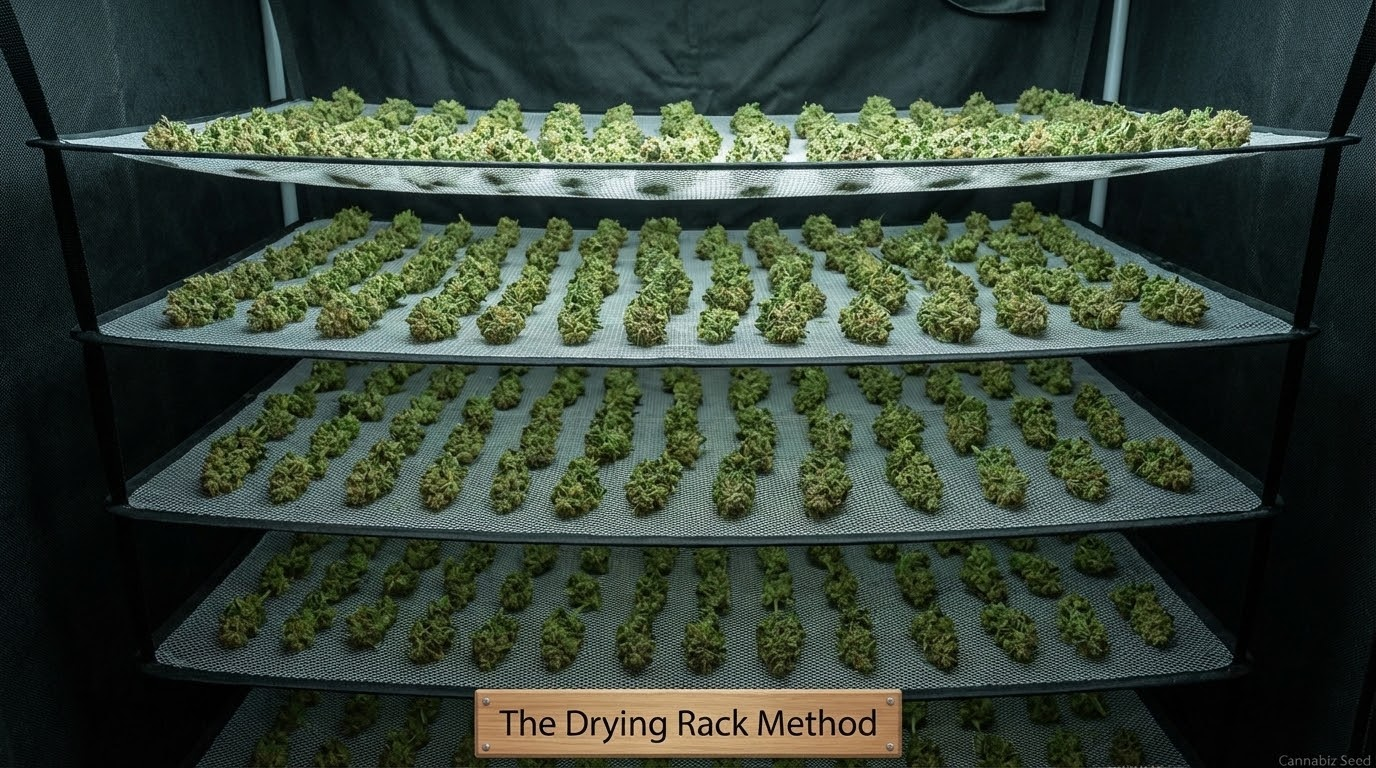
- Stops Mold in Humid Areas: By removing all the extra leaf and stem material right away, you drastically lower the risk of mold taking hold in a humid environment.
The Cons
- Dries Too Fast: This method can dry your buds too quickly. This is likely to trap chlorophyll and lead to that dreaded “hay” smell and a harsher smoke.
- Loses Flavor: That rapid dry can cause more of the volatile terpenes to evaporate, resulting in a less flavorful and aromatic final product.
- Can Flatten Your Buds: If you aren’t diligent about rotating them, your beautiful round buds can get a flat side from sitting on the rack.
- Requires a Wet Trim: You are forced to do a wet trim, which is notoriously sticky and messy.
How to Know When Your Buds Are Done
While the drying process usually takes seven to fourteen days, the precise timing is always influenced by your grow room conditions. The absolute best way to determine readiness for curing is by performing the timeless snap test. Go ahead and gently bend one of the smaller, secondary branches.
If the branch bends and feels soft, it means there is still too much moisture inside. Your buds are done once the branch makes a clean, audible snap. The outside of the buds should feel dry and slightly crisp to the touch, but not so dry that they crumble into dust.
Common Problems & Troubleshooting
Even with careful planning, you can run into issues. Here’s how to handle the most common problems.
Problem: It smells like “hay” or fresh-cut grass.
What Happened: This is a sign your buds dried too quickly, trapping chlorophyll inside. This usually happens when the temperature is too high or the humidity is too low.
How to Fix It: Unfortunately, this is very difficult to reverse once it happens. The best you can do is raise the humidity or lower the temperature to slow down the rest of the process. This really shows why getting the environment right from day one is so important.
Problem: You see mold or smell a musty odor.
What Happened: Your humidity is too high, your airflow is too poor, or your buds were packed too closely together.

How to Fix It: Act immediately. Increase your fan speed and lower the humidity with a dehumidifier. Carefully inspect every single bud. Any bud with visible mold—which can look like white fuzz or dark spots—must be thrown away. It is not safe to consume.
Problem: The buds are getting crispy too fast.
What Happened: Your humidity is too low, or the temperature is too high. How to Fix It: If you don’t have a humidifier, you can place a bucket of water or a damp towel in the room to slowly raise the humidity. Reduce your fan speed as well.
Problem: It’s been two weeks, and they still feel wet.
What Happened: The humidity is too high, or the temperature is too low, preventing water from evaporating efficiently.
How to Fix It: Use a dehumidifier to pull moisture from the air. You can also slightly increase the fan speed to help carry moisture away from the buds.