 Grow Guide
Wet Trimming vs Dry Trimming: Which Is Better for Your Buds?
Feb
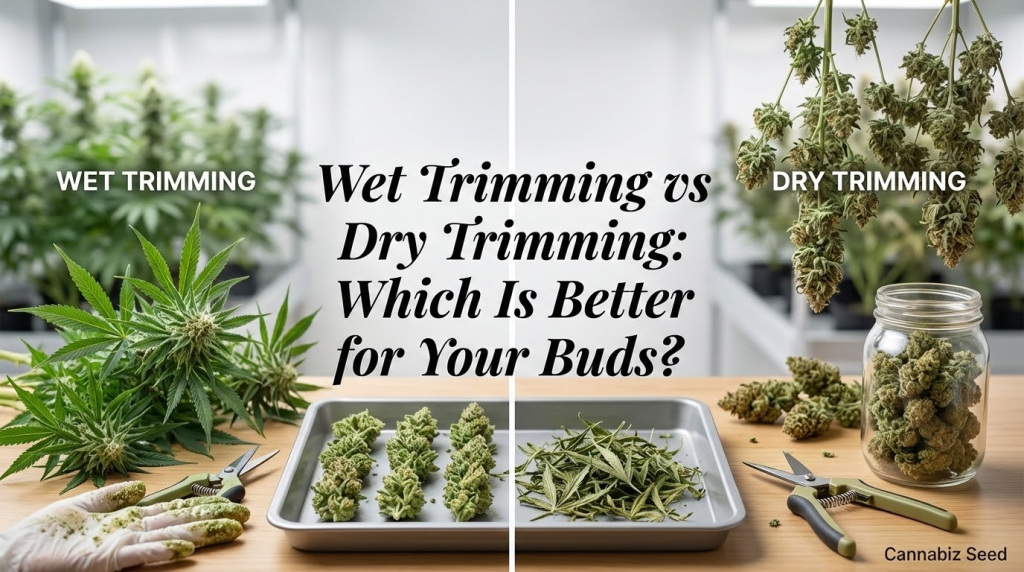
As a grower, your work isn’t done at harvest. How you trim your cannabis buds will make a huge difference in your final product. You can trim your buds “wet” (right after cutting) or “dry” (after hanging them up for a while).
Let’s break down why trimming is so important and then figure out which method is the right one for you.
Why do you trim cannabis buds?
Trimming isn’t just for looks. This step is critical for getting a top-quality harvest.
Better “Bag Appeal”
This is all about how your buds look. To achieve the clean, professional appearance that people expect, you need to trim. Removing the extra leaves makes the final product look much prettier and more finished.
A Smoother and Tastier Smoke
Those little “sugar leaves” left on the bud can taste harsh and burn poorly. When you snip them off, you let the bud’s real, natural flavor come through.
Stronger Bud Potency
The leaves just don’t have many trichomes (the frosty crystals) when compared to your buds. By getting rid of the low-potency leaves, your final, trimmed bud is stronger gram for gram.
Stops Mold After Harvest
Too many leaves trap moisture deep inside the buds. Trapped moisture is the number one cause of mold, which will ruin all your hard-earned buds. After trimming, air flows freely and helps protect your buds from mould as they dry.
The Wet Trimming Method: Fast and Sticky
What is Wet Trimming?
Wet trimming means you manicure your buds right after you cut the plant down and before you start the drying process. Everything is still green, sticky, and full of moisture.
How to Do It:
- Chop: Cut your plant down or take off the individual branches.
- Pluck: Pull off all the big, easy-to-grab fan leaves.
- Manicure: Use a pair of small, non-stick trimming scissors and carefully snip off all the little sugar leaves that stick out from the buds.
- Dry: Lay your freshly trimmed buds on a mesh drying rack to dry.
Why You’d Choose It (The Pros)
- It’s Fast: This is the biggest advantage. The leaves are soft and stick straight out, which makes them very easy to cut.
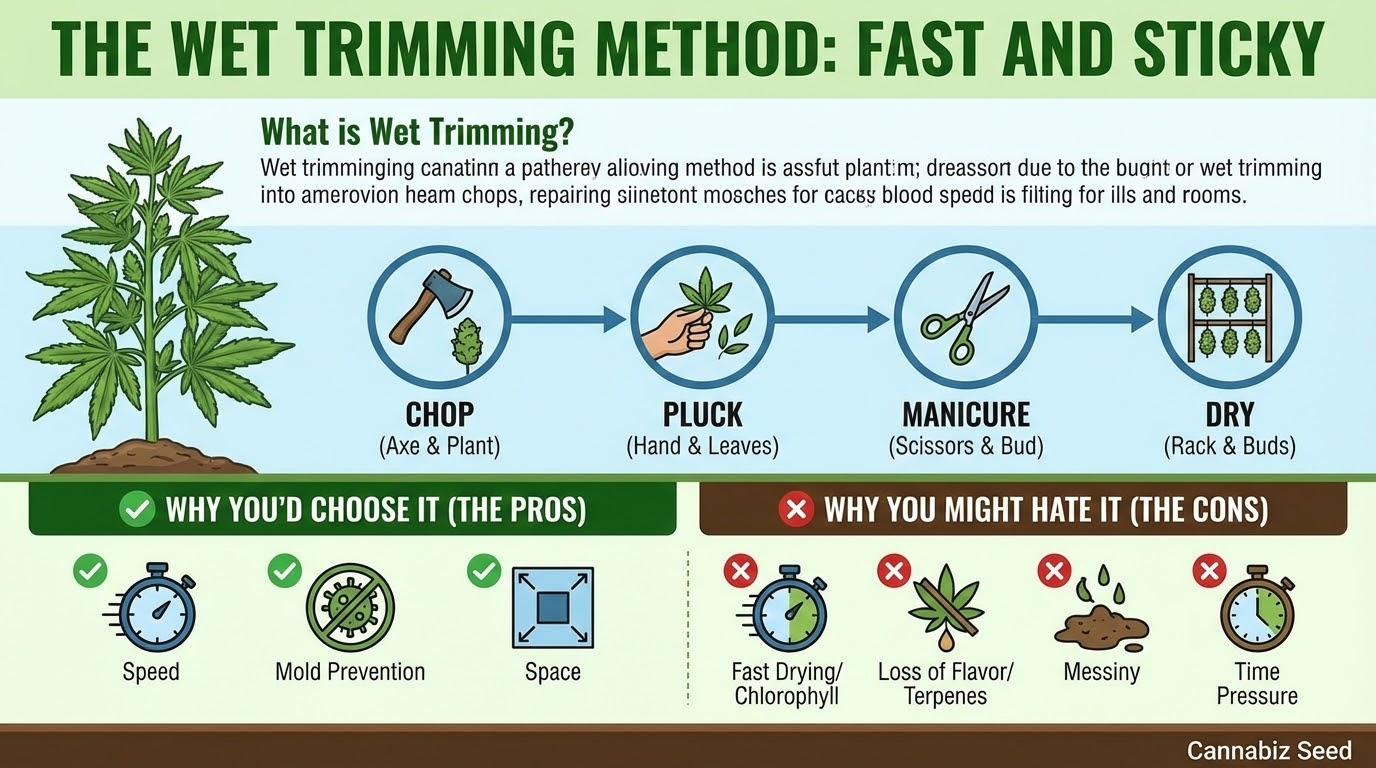
- Stops Mold: If you live somewhere humid, this method is a lifesaver. You get rid of all that wet leaf material right away.
- Saves Space: Trimmed buds are small. They take up way less room on your drying rack compared to hanging whole branches.
Why You Might Hate It (The Cons)
- Dries Too Fast: Without their leaves, buds can dry out too quickly. A fast dry often traps chlorophyll, which makes your smoke taste “grassy” or like hay.
- Loses Flavor: A rapid dry can also cause you to lose some of the plant’s terpenes (the compounds that give it smell and flavor).
- It’s So Messy: Be ready to get sticky. Your scissors and gloves will be caked in resin very fast.
- It’s a Race: You have to trim your entire harvest immediately. For large harvests, this can be overwhelming.
The Dry Trimming Method: Slow and Steady for Quality
What is Dry Trimming?
With this method, the trim starts after you hang your branches in a dark room to dry for about 7 to 14 days first.
How to Do It:
- Chop: Cut your plant down into large branches.
- Pluck (Just a Little): Only remove the biggest fan leaves. Leave all the small sugar leaves right where they are.
- Hang to Dry: Hang all the branches in a dark, controlled room. Wait until the small stems snap instead of bend (this is the sign they’re ready).
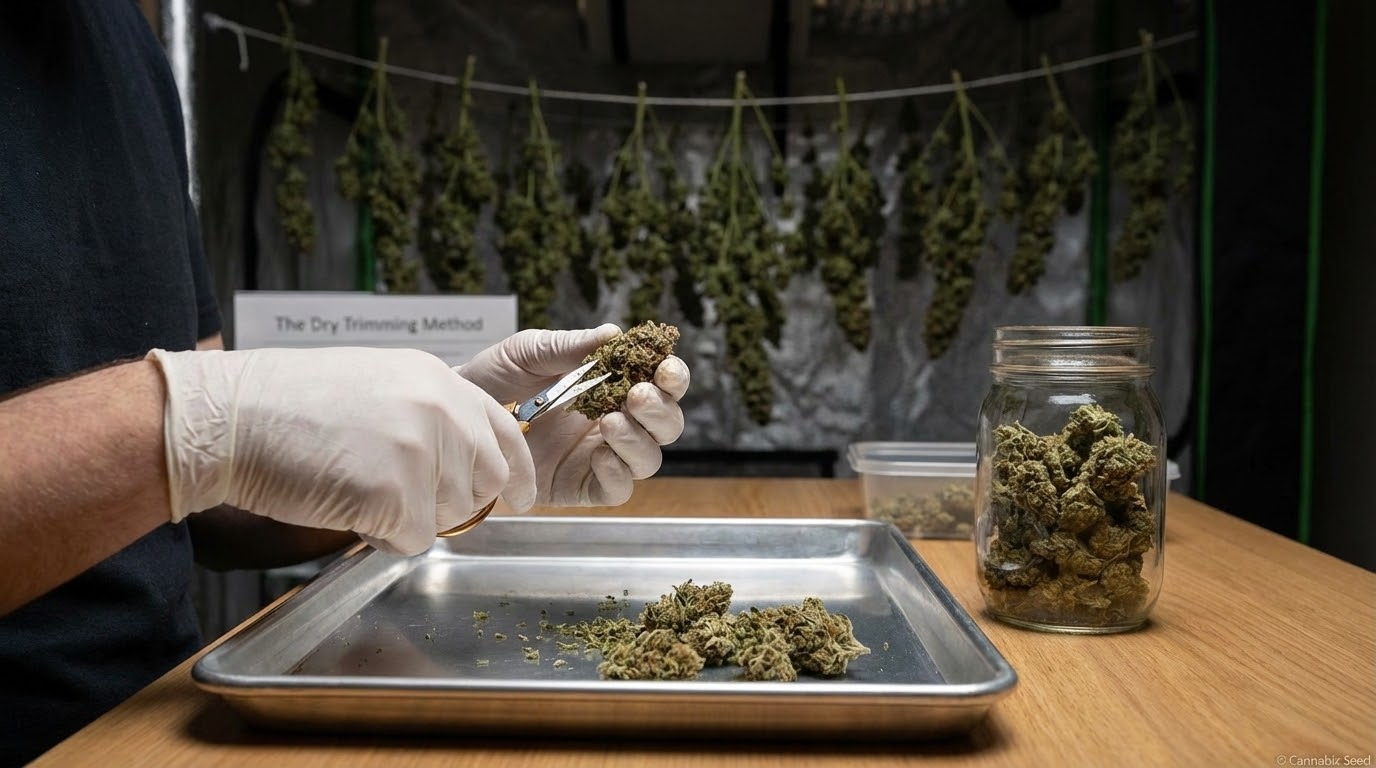
- Manicure: Now that they’re dry, carefully use your scissors to trim off the dry, curled-up sugar leaves from the buds.
Why It’s Worth It (The Pros)
- Best Flavor and Smell: This is the top reason growers choose it. The slow, protected dry keeps more of the terpenes safe. Your final product will smell and taste much better.
- Smoother Smoke: That slow dry also gives the plant time to break down chlorophyll. This completely gets rid of the “grassy” taste and makes the smoke incredibly smooth.
- So Much Cleaner: The process is not sticky at all. It’s much cleaner and easier to manage.
- No Rush: Once your plants are properly dried, you can trim them whenever you want. You can take your time and do a few jars’ worth each night.

Pro Grow Tip : Dried trimming is the preferred method for many growers. This helps to preserve terpenes, slow the drying process, and protect trichomes.
What’s the Downside? (The Cons)
- Takes Forever: Trimming dry leaves is slow. They are brittle and curl inward, so you have to be much more careful.
- Needs Lots of Space: You must have a big enough room with the right climate to hang all those branches for one or two weeks.
- It’s Tricky: It’s easier to accidentally knock trichomes off or break up the buds. You need a gentle touch.
Is it better to trim dry or wet?
To find your answer, just ask yourself these questions:
- What’s your climate like? If you live in a very humid area, wet trimming is safer to prevent mold. If you’re in a dry area, dry trimming is better because it slows down the dry.
- How much room do you have? Got a big, dedicated drying room? You can dry trim. If you’re drying in a small closet or tent, wet trimming saves a ton of space.

- What’s your priority: speed or quality? If you need to get it all done fast, wet trim. If your only goal is the highest quality, best-tasting smoke, dry trim every time.
- How big is your harvest? Large commercial farms often wet trim to save time and labor. Small hobby growers usually dry trim to get the best possible quality from their plants.
Final Advice
There isn’t one “best” answer that fits everyone. The right choice truly depends on your specific situation.
Most experienced growers will tell you to wet trim. It’s just simpler and safer, especially if you’re worried about mold or don’t have a perfect drying space.
However, if you have your drying room conditions totally controlled and you are dedicated to getting the best possible aroma and flavor, then dry trimming is the superior choice. It’s more work, but the smooth, flavorful results are worth it.