
 Grow Guide
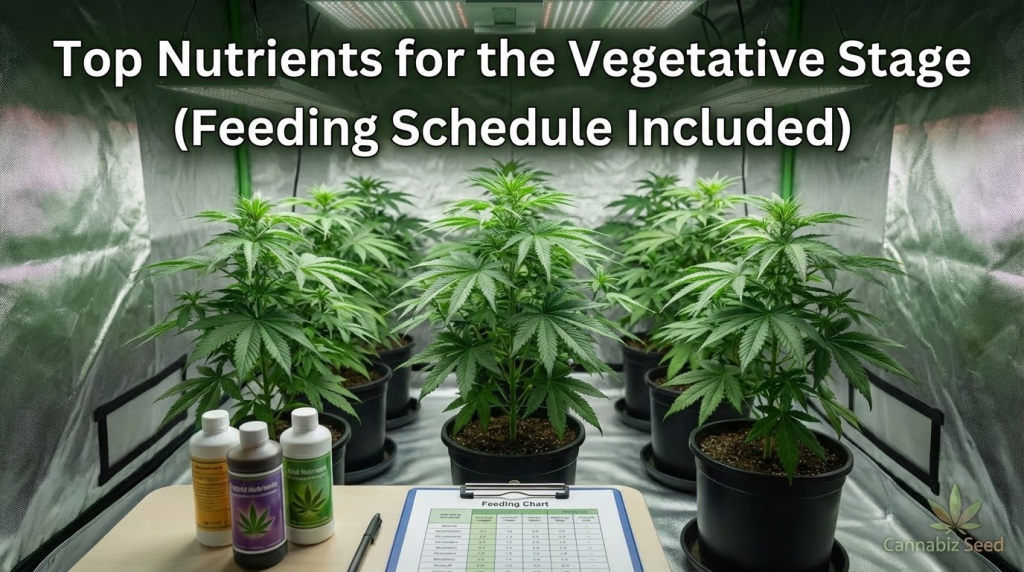
Top Nutrients for the Vegetative Stage (Feeding Schedule Included)
Feb
The vegetative stage of your cannabis plants provides the platform that will dictate the outcome of the flowering stage. One of the most important ways to ensure that your plants lay this foundation well is by using a robust nutrition regimen.
This article serves as your comprehensive guide to the top nutrients for a successful vegetative period. Read on to learn how to make a feeding schedule and fix common nutrient issues.
The Role of Key Nutrients in Vegetative Growth
The vegetative period sees your cannabis plants grow from tiny and fragile seedlings to vigorous plants with firm stems, branches, foliage, and a robust root network. All these need the proper nutrients to grow and develop.
Macronutrients as the building blocks
Macronutrients are what the plants need in large quantities to support the rapid physical growth.
Primary macronutrients
The primary macronutrients are Nitrogen, Phosphorus, and Potassium (N-P-K). A fertilizer with a high N-P-K ratio, such as 3-1-2 or 4-2-3, is ideal for veg.
Nitrogen
Nitrogen is a crucial component in the chlorophyll structure. For starters, chlorophyll is the green pigment that helps plants harness light energy for the photosynthesis process. Without it, the plant cannot utilize light energy to create the food it needs to grow.
Phosphorus
Phosphorus works deep in the root zone to ensure the plants develop an extensive network for maximum nutrient and water absorption. Additionally, a healthy root ball gives the cannabis plants a sturdy anchorage in the soil.
Potassium
Potassium is known as the regulator of the plant’s internal processes. It is involved in controlling everything from nutrient absorption to water uptake and transport. Moreover, potassium provides plants with a firm structure by strengthening their cell walls.
Secondary macronutrients
The difference between primary and secondary macronutrients lies in the amount required by the plants. Secondary macronutrients play a supporting role to N-P-K, yet they are also vital building blocks of the vegetative stage nutrition regimen.
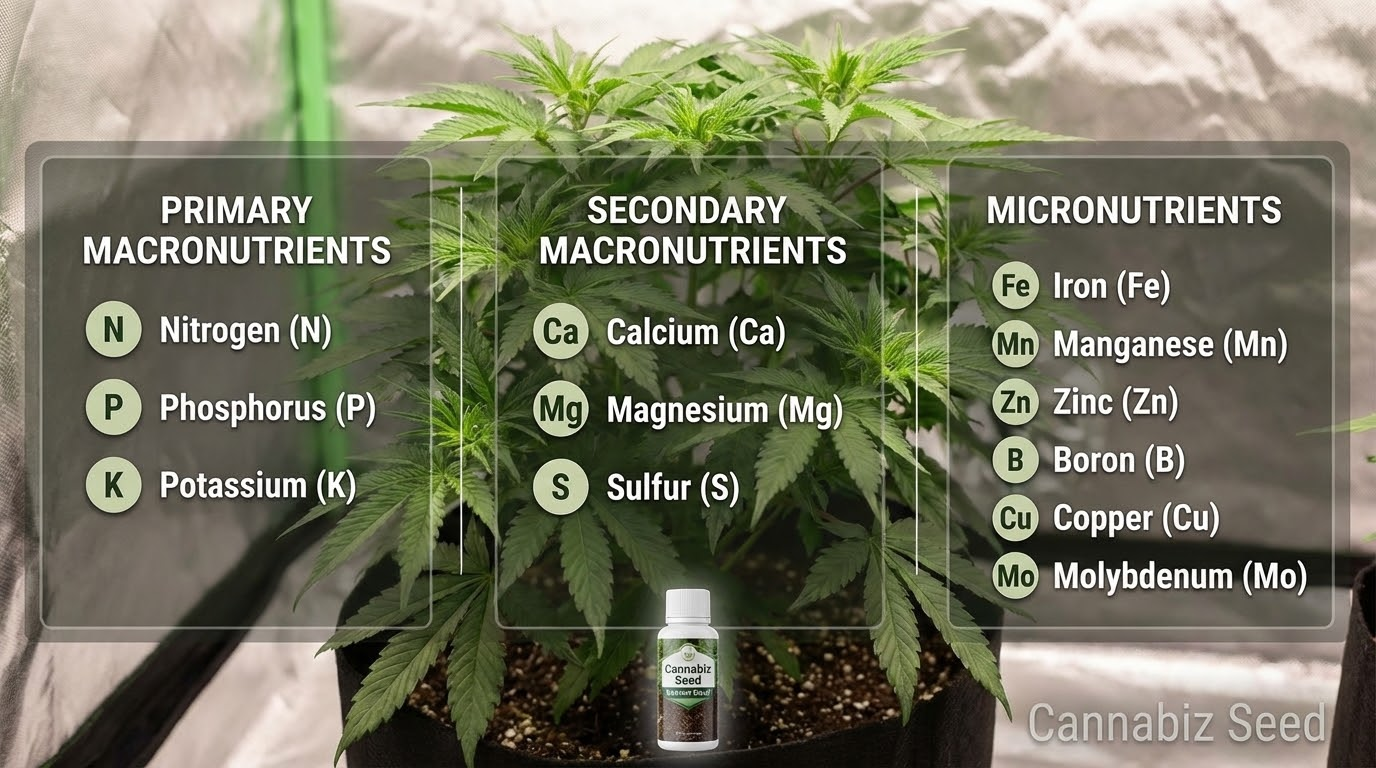
- Calcium (Ca) is like rebar that strengthens the cells to provide the plant with strength and stability.
- Magnesium (Mg) is another component of chlorophyll. Nitrogen forms the outer ring, while magnesium is the central ion that stabilizes the chlorophyll molecule.
- Sulfur (S), although often overlooked, plays a crucial role in the production of proteins and enzymes that act as catalysts for various biological processes.
Micronutrients
Micronutrients are indispensable even though they are only required in tiny quantities. These nutrients handle more specialized processes in the cells.
- Iron (Fe)—metabolic processes and chlorophyll formation
- Manganese (Mn)—photosynthesis
- Zinc (Zn)—hormone production and enzyme regulation
- Boron (B)—calcium utilization
- Copper (Cu)—photosynthesis and metabolism
- Molybdenum (Mo)—conversion of nitrates into usable nitrogen for the plant
How to Craft a Vegetative Feeding Schedule
When building a feeding schedule, you need to structure the constantly changing nutrition needs for your weed plants.
Choosing the Right Delivery Method
You have several options to deliver nutrients to your plants.
Root feeding in soil
In root feeding, a granular or concentrated liquid feed is dissolved or diluted in water, which is then used when hydrating the growing medium. This way, the nutrients go into the medium, after which they are absorbed through the roots.
Beyond the cost-effectiveness of this method, the soil serves as a natural buffer that stores nutrients and releases them gradually, preventing over- or under-feeding. And as a bonus, tiny soil microorganisms can help break down nutrients into easier-to-absorb forms.
Automated fertigation
This method involves delivering a nutrient-rich solution directly into the cannabis plant’s root zone using a computerized irrigation system. This is primarily observed in hydroponics and other soilless mediums, such as coco coir, where drip lines are installed.

Pro Grow Tip : Most nutrient problems come from overfeeding. Start lighter than what the bottle recommends, and increase gradually.
Auto fertigation delivers nutrients faster while being more consistent than root feeding. It also reduces the need for manual labor.
However, going this route means dealing with higher expenses and a more hands-on system. Pumps, timers, and tanks don’t come cheap, and they need care. What’s more, the rapidly developing plants leave little room for error, which can wipe out the entire grow progress fast.
Foliar feeding
Foliar feeding delivers nutrients through the stomata pores on the leaves. It’s most often used as a supplement in the vegetative stage rather than a primary feeding strategy. Growers spray the diluted nutrient solution as a fine mist during dark hours when stomata are open.
Its most significant advantage is speed, especially when solving micronutrient deficiencies. In some cases, it is a quick way to save a stressed grow due to nutrient lockout in the roots.
The main downside is that this method is strictly limited to supplementation. Foliar cannot deliver macronutrients to sustain growth, especially in the early days when the foliage is underdeveloped. Also, poor timing and nutrient concentrations can risk leaf burns, while excessive moisture spray on leaves may lead to mold and mildew.
Cannabis Vegetative Stage Feeding Timeline Explained
Here is the feeding timeline for the cannabis vegetative stage. It is a gradual week-by-week nutrient requirement that covers the plant’s growth over the period.
Week 1
During the first week of vegetative growth, your plants are weaning off zero feeding as they wind up the seedling stage. At this time, they are feeding off the food reserves stored in the seed cotyledons and the minerals present in the initial potting mix.
Once the plants develop 3 to 4 true leaves, you can start with a minimal vegetative fertilizer. Many growers will go with ¼ of the recommended dose by the feed manufacturer. This rationing prevents shocking or burning the delicate roots.
Early vegetative stage (Weeks 3–4)
As the plants approach their second week, you can gradually increase the dosage to ½ to ensure an adequate nitrogen supply. A vegetative nutrient formula with a high nitrogen ratio, such as 4:2:3, works best.
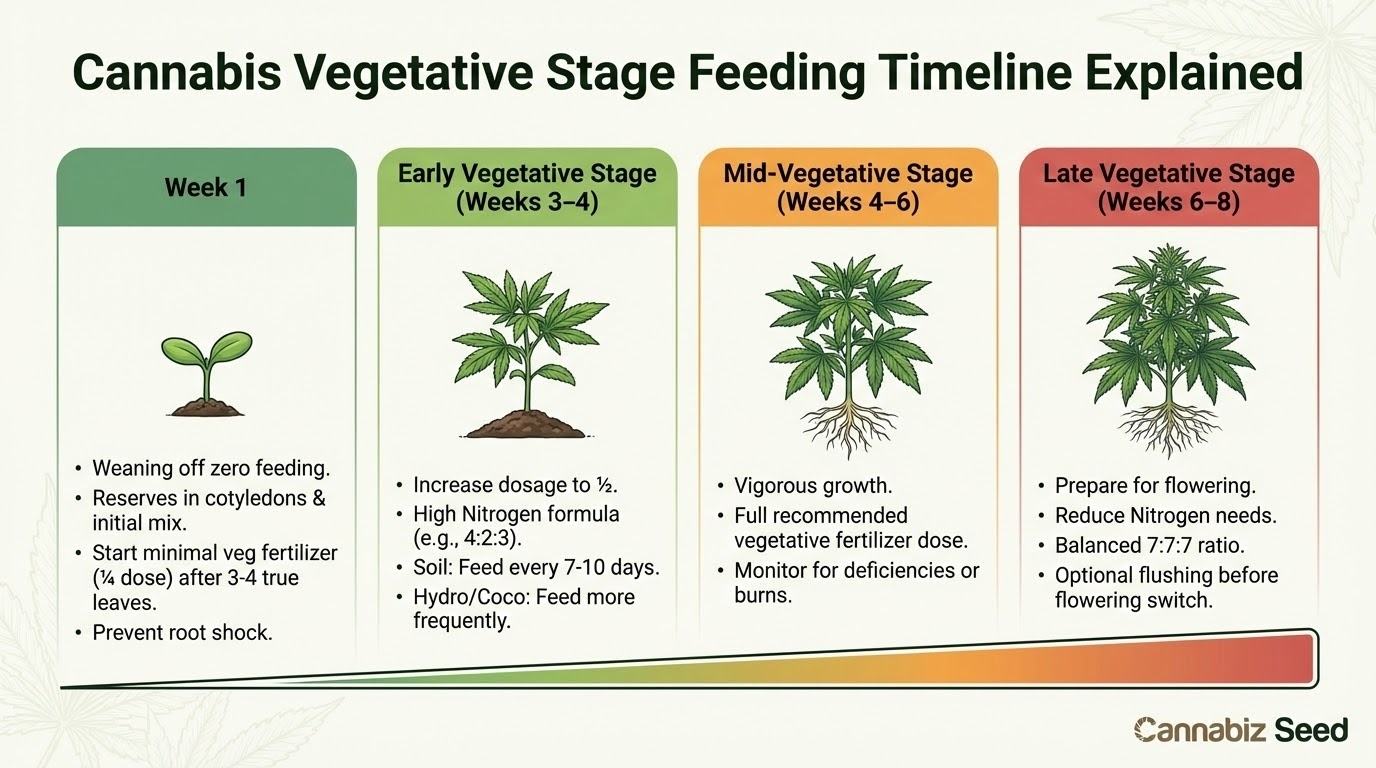
If you are growing in soil, it is recommended to feed every 7-10 days. Hydroponics and coco coir growers should feed more frequently, as these media hold fewer nutrients.
Mid-vegetative stage (Weeks 4–6)
Cannabis plants at the mid-veg stage are now hungry for more nutrients to fuel their vigorous processes. With an adequate root network and foliage, you can go all in on the recommended vegetative fertilizer nutrient formula.
Watch out for any signs of deficiencies or burns so they can be corrected early by adjusting the feeding strength.
Late vegetative stage (Weeks 6–8)
For strains that have a late vegetative stage, this is the time to start preparations for the upcoming flowering stage. Otherwise, fast-finishing flowers should be prepped as early as the fourth week.
Since the plant’s nitrogen needs are reducing, so should the N-P-K ratio. A more balanced 7:7:7 ratio maintains stability in case of deficiencies. Flushing is also optional during pre-flowering to remove excess minerals and salts before switching to a flower-friendly feeding schedule.
Troubleshooting the Most Common Nutrient Issues
Sorting out nutrient problems in cannabis works best with a step-by-step approach. What you’re really doing is reading the plant’s signals, whether they point to a shortage, an overload, or a lockout.
Deficiencies and solutions
- Nitrogen shortages typically affect the lower leaves first, causing them to turn pale from the tip to the stem. A quick boost of nitrogen will bring colour and balance back in no time.
- Low Magnesium is easy to spot when yellow patches appear between the veins of older leaves. A foliar spray containing magnesium sulfate works as the fastest fix, while applying Cal-Mag in the root zone helps stop the problem from coming back.
- Iron deficiency hits young leaves first. Pale tissue with dark green veins is the giveaway. A chelated iron supplement usually resolves the issue in days.
Nutrient Burn (Excess)
Burned leaf tips are the classic sign of overfeeding. They turn brown and crispy while the rest of the leaf stays green.
The solution begins by running a large amount of clean water through the medium to wash away the built-up salts. Once the roots have had a chance to clear out, reintroduce nutrients gently at a reduced strength.
Nutrient Lockout
Nutrient lockout happens when the plant’s roots can’t take in nutrients, even though they are abundant in the soil. The issue usually traces back to a root zone that’s thrown off balance by either pH problems or heavy layers of salts.

When this occurs, the leaves may fade to yellow, exhibit crisp brown marks, or cease growing altogether. The strange part is that the feed schedule might look perfect, which often misleads growers into pouring in more nutrients. That extra feed only adds more salts and causes the root zone to spiral further out of control.
To fix the lockout, growers must wash the medium hard with plenty of clean and pH-steady water. Once rinsed, the soil or coco needs to dry thoroughly before nutrients are steadily reintroduced.
Conclusion
The vegetative stage becomes smoother when you know how the top nutrients work together, follow a feeding routine, and stay attentive to your plants’ needs. Every bit of care you put in now shows later, as strong stems and vigorous leaves.